
The most expensive thing in fashion is not the fabric.
I have spent fifteen years building a fashion business in Lagos and here is what that sentence actually means.
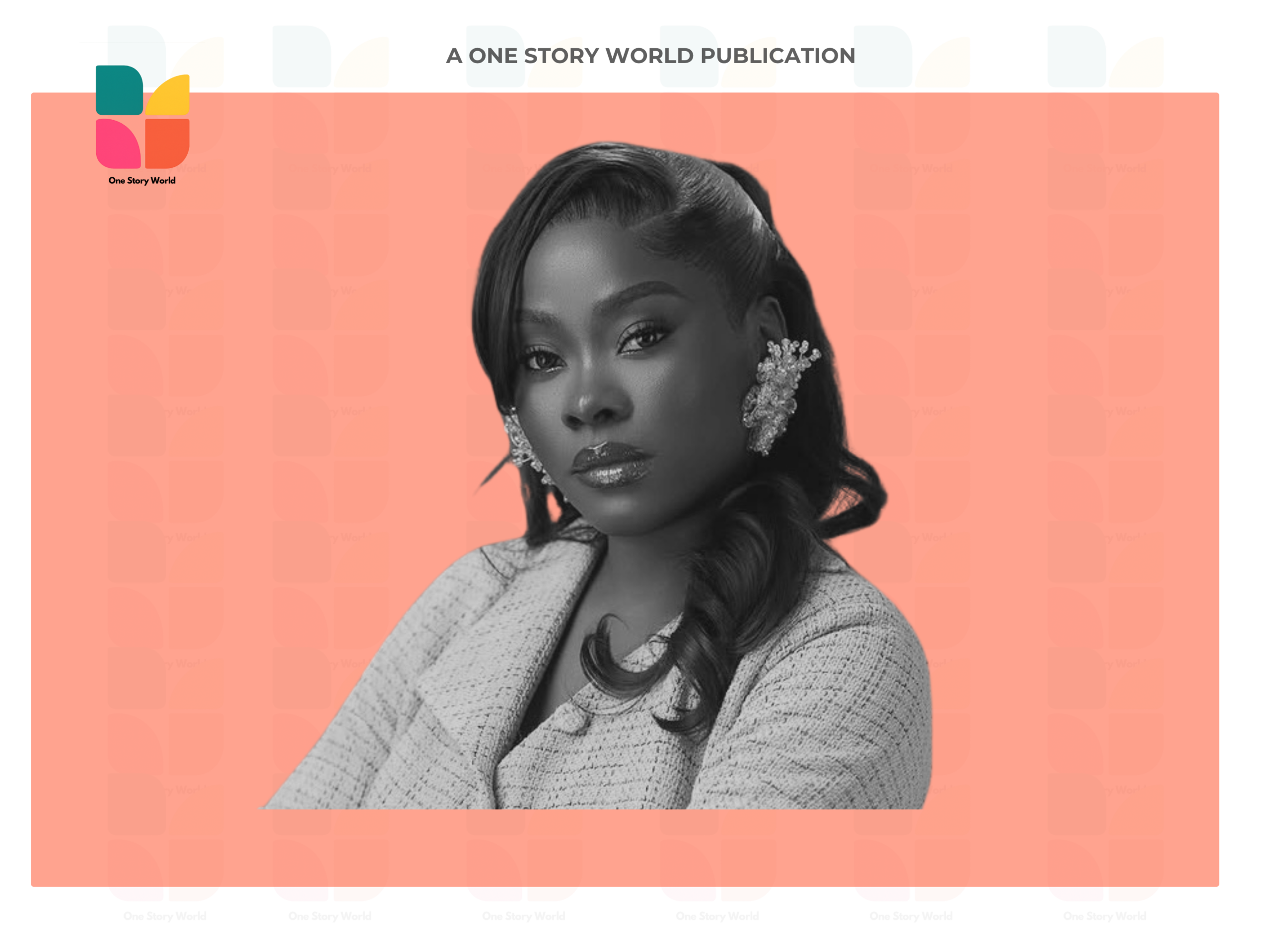
Bridget Ojochide Agba
· · ·
The African fashion industry has a cost and I know what it is because I have been paying it for fifteen years. My daughter is two years and seven months old. She loves texture. She has a blanky she carries everywhere, and on the night I want to tell you about, she was asleep on my office couch at 2:13 a.m. with it pulled tight around her, completely peaceful, while I stood thirty feet away under fluorescent lighting arguing about zippers.
She has always loved texture and find this quietly funny because her mother has spent fifteen years thinking about almost nothing else.
The factory was not quiet, it never is at that hour. Generators running somewhere in the dark, you can smell the hot fabric in the air, machine oil, burnt interfacing, and most importantly, the smell of exhaustion itself. Twenty machines running slightly out of sync, somebody laughing too loudly at the back because Nigerians get funnier the closer they are to collapse, and at 2 a.m. everyone in that room was close.
I was running two conversations simultaneously. One about a delayed zipper shipment from Aba. The other about whether a deputy director at a federal agency would prefer navy blue or something, his exact words, more executive. Both conversations needed to be resolved before sunrise and this was a Tuesday.
Somewhere in the middle of all of it, a thought I have had many times but felt particularly clearly that night: this industry is expensive. Not financially. Humanly. The nervous system required to hold all of this together, the campaigns and the clients and the garments and the payroll and the zipper and the deputy director and my daughter sleeping peacefully thirty feet away, is a cost that does not appear on any invoice. Nobody talks about that cost, the industry prefers not to.
· · ·
The campaigns get the applause. The nervous system gets nothing. That is not an oversight. That is how the industry was designed.
· · ·
I have believed something since before I started this business. Every piece of clothing tells a story about the person wearing it. The weight of the fabric. The way a collar sits. Whether the seam holds the third time or begins quietly separating at the shoulder. You communicate something every time you get dressed whether you intended to or not.
What fifteen years taught me is what I did not know when I started. Every piece of clothing tells a story about who made it too.
The delayed shipment absorbed into the timeline without the client ever knowing. The production mistake corrected overnight. The human fatigue stitched quietly into the lining of something that will be worn to a beautiful event where nobody in the room will think about any of it. The industry has a very specific interest in keeping the distance between the garment and its making as wide as possible. Beauty is easier to sell when it looks as though it arrived that way. It only looks that way when the effort is made invisible.
I have spent fifteen years making effort invisible. I have also spent fifteen years understanding exactly what that costs.
· · ·
Every piece of clothing tells a story about who made it. The delayed shipment. The overnight correction. The fatigue stitched into the lining. The industry has a specific interest in keeping that story quiet.
· · ·
There is a lady in my production space named Ella. When everything is going wrong – which in fashion is most of the time, she is cheerful in a way that does not feel like a performance. Sometimes I wonder if we are existing in the same timeline. But I have learned that cheerfulness under pressure is a sign of competence, not obliviousness. The people who panic are rarely the ones who know what they are doing.
When everyone around her starts to panic, Ella becomes calmer, almost irritable at the chaos itself, as if panic is simply inefficient and she has no patience for inefficiency. When she looks at a new garment she squints at it first, almost suspiciously, taking her time. Then she says: I can’t wait to see what we do with this.
She said something to me once that I have not stopped thinking about. I was more anxious than usual about a deliverable. She looked at me and said: every time you are more concerned than usual about a deliverable, things always go smoothly.
I laughed. And then I turned it over in my mind for weeks. Because what she was really saying is: your concern is part of the system. Your nervous system is part of the production infrastructure. The worry is not separate from the work. It is the work.
I have not found a more accurate description of what it is to run a fashion business in Nigeria.
· · ·
The most operationally intelligent people I have met in this industry are rarely the loudest ones in the room. Competence does not perform. It simply solves.
· · ·
I was in a room once where people were celebrating African fashion very loudly. The language was big and confident. Renaissance. Global moment. Opportunity. Everyone saying the right things with great certainty. And I remember looking around thinking: nobody here is talking about the labour. Nobody is talking about the factories. Nobody is talking about the women actually building these garments.
Everything in that room sounded beautiful and incomplete at the same time.
That was when I understood something I had been feeling for years without the words for it. Visibility and truth are not always the same thing. A story can be told loudly and still leave out the most important parts.
African fashion has an instinct that I do not think the global industry fully understands yet. An emotional intelligence specific to this continent. We know how to create beauty in difficult conditions. We know how to improvise elegance. We understand drama, colour, tailoring, femininity, presence. There is a confidence in African fashion that does not ask permission before entering a room. That instinct is real and it is ours.
What it needs around it is structure. Systems. The kind of operational infrastructure that allows instinct to scale without burning out the people carrying it. African fashion exports talent and imports structure. And structure is where economic power actually lives, not in the garment nor the campaigns but in the system that produces beauty reliably, season after season, without collapsing under the weight of its own ambition. That system is what this industry is still building, and the people doing the most essential work of building it are the least visible in the story the industry tells about itself. It looks accidental but in the way it really operates, it seems like a policy. And it will not change until the industry is honest about what it actually costs to produce the beautiful things it celebrates.
· · ·
African fashion has the instinct. What it is still building is the infrastructure that allows instinct to outlast the person carrying it. That is the conversation the industry is not having loudly enough.
· · ·
Sometimes I sit at beautiful events watching people admire clothing and I can see, underneath every garment, the invisible infrastructure behind it. The delayed shipments. The exhausted tailor. The production mistake corrected at midnight. The nervous system of whoever held it all together. There is a strange loneliness in knowing too much about how things are made, because once you understand labour deeply, beauty stops looking effortless to you forever. You see the work inside everything and you certainly cannot unsee it.
I used to think this was something I had lost. Now I understand it is something I earned.
If I were speaking privately to a younger woman starting out in this industry, I would tell her what nobody told me. This business will try to convince you that visibility is the same thing as success. It is not. Some of the most visible people in fashion are deeply unstable privately. Some of the quietest operations are the healthiest. Build systems before aesthetics. Learn money before you learn press. Protect your nervous system with the same seriousness you give your creative vision. Do not confuse burnout for ambition. They feel identical from the inside but they produce very different lives.
Do not become so consumed building beautiful things that you forget to build a beautiful life for yourself too. I am still learning this one. Fifteen years in and I am still learning it.
But I am learning it here. In this factory. At this hour. With my daughter thirty feet away and twenty machines running out of sync and a zipper shipment still unresolved. I did not build this to be visible. I built it to last. There is a difference and it took me fifteen years to understand it properly.
I would not trade that for anything.
· · ·
Bridget Ojochide Agba is the CEO and Creative Director of Jochlieu Apparel International and founder of the Jochlieu Masterclass Academy. She has represented Nigeria at the United Nations Commission on the Status of Women and the Meta Nairobi Summit, and is currently pursuing dual postgraduate degrees at the University of Lagos and the INSEAD.
The Unseen is One Story World’s column on the architecture beneath the visible. It does not report what happened. It explains what it means.
Africa has a story. This is where it gets told.