
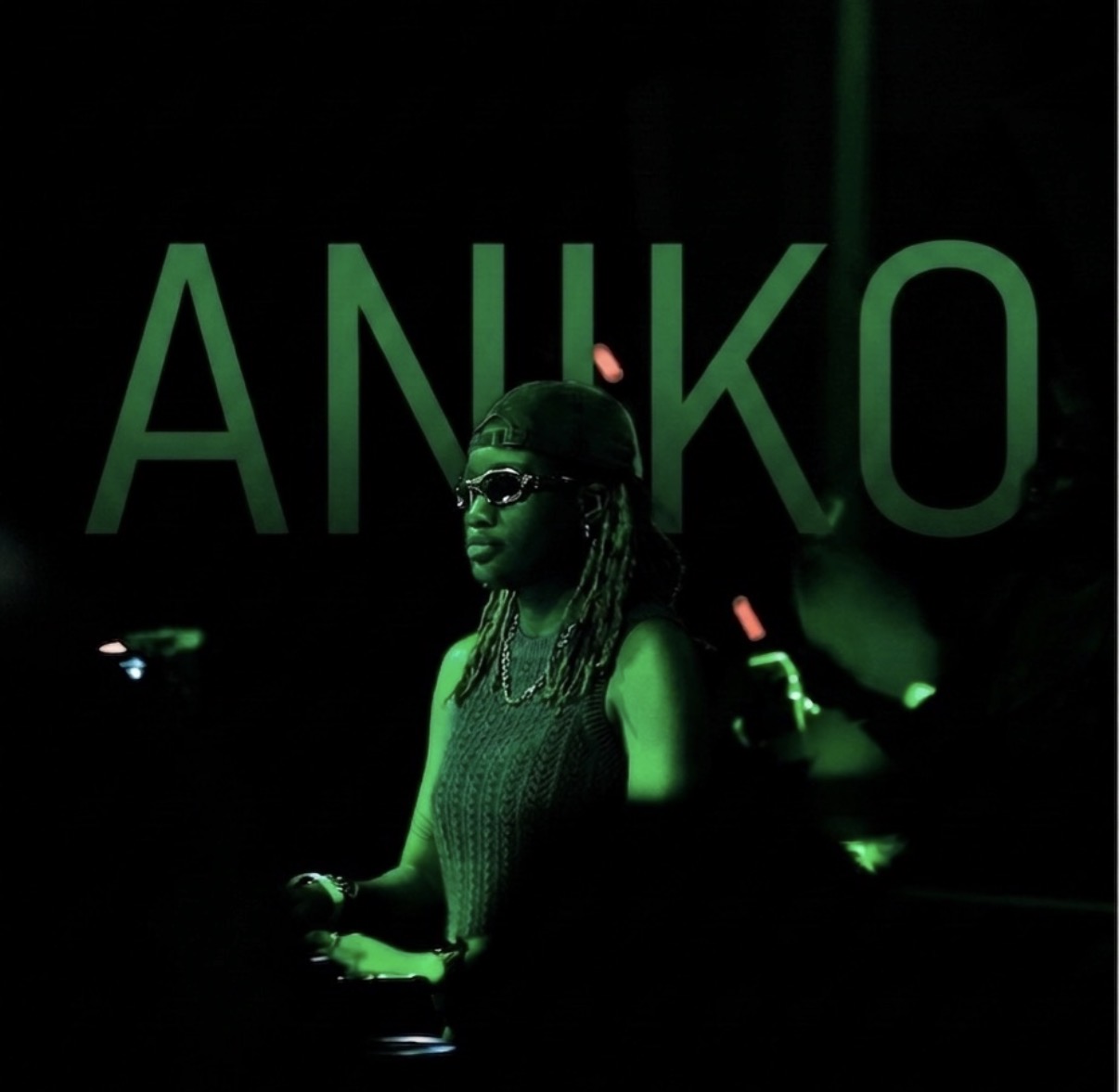
“Group Therapy is Lagos’s most consistently sold-out event. The more interesting question is why, and what it says about who gets to shape culture from the inside of a continent the world keeps misreading.“
– Biola Olaore
“Group Therapy excites me because it’s a leveler. Celebrities show up here to experience without feeling like public figures. That tells me we’re doing something right.” – Aderinsola Ogala, founder
Source: Communiqué – “Late-night raves are powering the next phase of Lagos’s creative economy”
There is a specific kind of intelligence that looks unreasonable from the outside. The kind where someone identifies a gap so precisely, fills it so completely, and repeats it with such deliberate frequency that the market has no choice but to reorganize itself around what they have done. Aderinsola Ogala, known everywhere as Aniko, has that intelligence. She applied it to Lagos nightlife. The result is Group Therapy, and the result keeps selling out.
The architecture matters more than the music, which is already excellent. What Aniko understood, and what most event organizers never understand, is that the product is not the night. The product is the belonging. The rave as container for something people cannot easily locate in their regular life: a room with no hierarchy, no VIP section splitting the crowd into those who matter and those who are merely present, no artist elevated on a velvet rope while everyone else forms a circle around the privilege. Just people, a stage, sound, and the rare Lagos experience of no one performing their status. Aniko called it therapy because she meant it.
· · ·
This is the part the world tends to get wrong about African creative infrastructure. It looks at the output and calls it culture. It does not look at the decision-making underneath it. It does not see the green color code Aniko chose deliberately and held to. It does not see the ticket architecture designed to punish hesitation, to reward community, to signal that Group Therapy is a subscription and not a drop-in. Every element of how this brand presents itself to the world was thought through. The intimacy was engineered. The scarcity is structural, not accidental.
Lagos has always had parties. Lagos has had famous DJs with loyal followings, weekly events with consistent attendance, a nightlife economy that is real and significant and almost entirely overlooked in global music conversations. What it had not produced, at least not in this form, was an event series that made the barrier to entry part of the product. You buy the ticket not knowing where you are going. You pay the market price if you miss the primary sale. You are not buying access to a location. You are buying membership to a community that has decided you want in, and that your commitment to showing up is part of what makes the room work when you arrive.
But here is what changes everything about this story. Group Therapy did not stay in Lagos.
Aniko took the same room, the same architecture, the same insistence on a flat floor where no one outranks anyone, and replicated it across a continent and beyond. Nairobi. Accra. Kampala. Abuja. Port Harcourt. And then London, where the African diaspora has spent decades keeping its own culture alive in rooms that the broader city rarely acknowledged. Everywhere Group Therapy has landed, it has landed as itself. The green. The blind ticket. The community-first logic. The music that refuses to be ambient and insists on being felt. Nothing was diluted for the new geography. Nothing was softened to make it easier for outside audiences to receive. The brand traveled whole.
This matters in a way that transcends nightlife. What Aniko has done is demonstrate that a brand born in Lagos, built on Lagos logic, tested and sharpened by Lagos crowds, can export itself to East Africa, West Africa, and the UK without becoming something else in the process. This is not a small thing. The default assumption in global creative industries has always been that African-born cultural products must be translated, adapted, or repositioned before they travel. Group Therapy is a direct argument against that assumption, made not in a think piece but in a sequence of sold-out rooms across four countries and counting.
The brand traveled whole. Nothing was diluted for the new geography. Nothing was softened to make it easier for outside audiences to receive.
Boiler Room came to Lagos and partnered with Group Therapy. The International Music Summit listed Aniko among its speakers. These are not coincidences. They are the world catching up to something that had already been road-tested across a continent. But the world tends to arrive at African cultural production the way a tourist arrives at a city that has been functioning without them: a little breathless, a little impressed, and mostly unaware of the infrastructure that made the thing possible before they got there.
· · ·
There is something specifically significant about the fact that it is a woman who built this. Not because women building things requires explanation, but because the conditions under which this particular thing was built do. The electronic music world globally, including in Lagos, has structural biases about who is allowed to be the architect and who is allowed to be the talent. Aniko collapsed that distinction. She is the founder, the DJ, the creative director, the brand. The green aesthetic is hers. The community, replicated now across seven cities, is hers. The sold-out sign is a recurring data point she has generated with her own hands, across two continents, from inside a city that does not make this easy for anyone and makes it harder for some.
What Group Therapy has proved, monthly and without interruption, is that Afro-house and melodic techno and deep house are not niche sounds that Lagos tolerates on the margins of its Afrobeats dominance. They are sounds that Lagos wants badly enough to plan around, that Accra wants, that Nairobi wants, that London’s diaspora has been waiting for someone to bring to them with the full weight of its original context intact. Aniko did not wait for permission to make this argument. She made the argument with the room itself, and the room has kept agreeing, in seven cities, across two continents, at consistent volume.
The world has a habit of explaining African creativity as though it emerged from a vacuum, as though Lagos does not have an internal logic, an internal ambition, an internal critical mass of people who know exactly what they are building and why. Group Therapy is not a scene. It is a proof of concept. It is Aderinsola Ogala’s answer to the question of what happens when someone who understands the gap decides to fill it with precision, take it on the road, and refuse to reduce the standard when the going gets difficult.
She is still here. The shows keep selling out. The world is starting to pay attention. It was always going to catch up eventually. It usually does.
The Unseen is One Story World’s column on the architecture beneath the visible. It does not report what happened. It explains what it means.